Shifts in Player Session Behaviors Tied to Loyalty Tier Upgrades Within Browser-Based Table Game Environments Under Canadian Provincial Oversight
Written by Kai Zimmermann · Jun 13, 2026
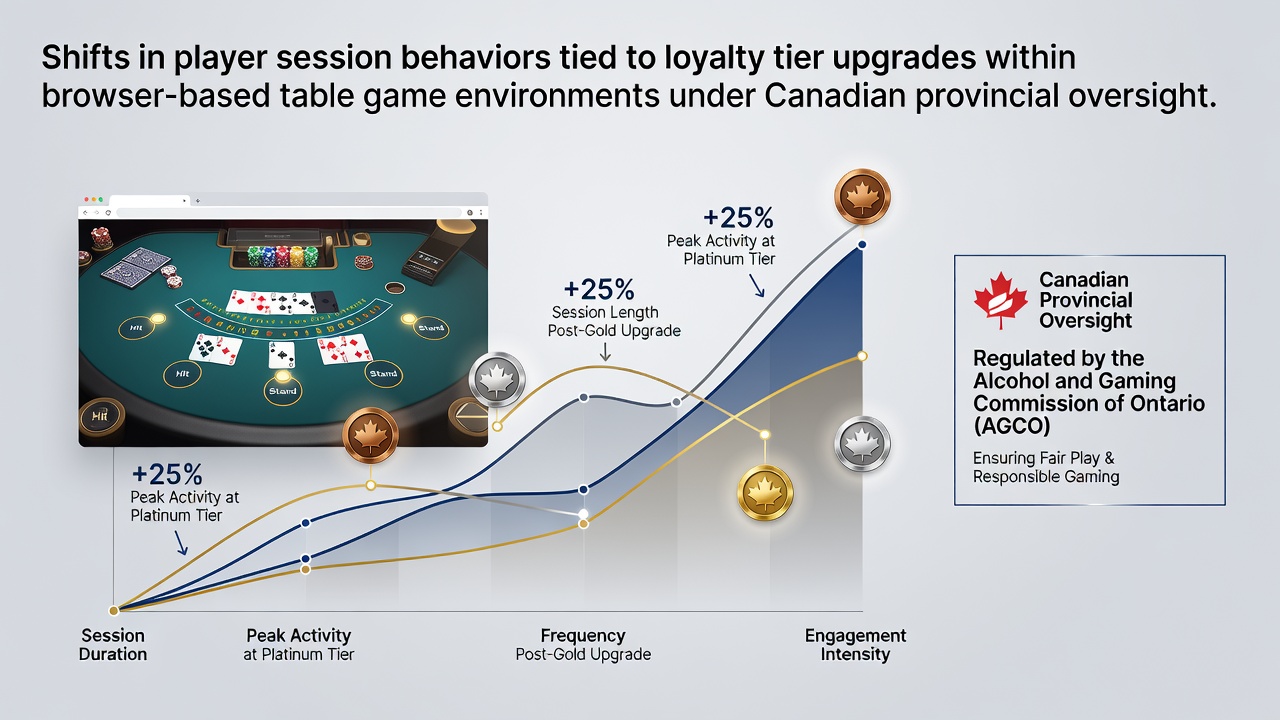
Shifts in Player Session Behaviors Tied to Loyalty Tier Upgrades Within Browser-Based Table Game Environments Under Canadian Provincial Oversight
Canadian provincial regulators have overseen steady growth in browser-based table game participation since the expansion of legal iGaming markets, and loyalty tier upgrades represent one mechanism that correlates with measurable changes in how players structure their sessions. Provinces including Ontario, British Columbia, and Quebec maintain distinct oversight frameworks that require operators to track and report player activity patterns tied to reward structures, which creates datasets researchers can examine for behavioral trends.
Provincial Regulatory Context and Data Collection
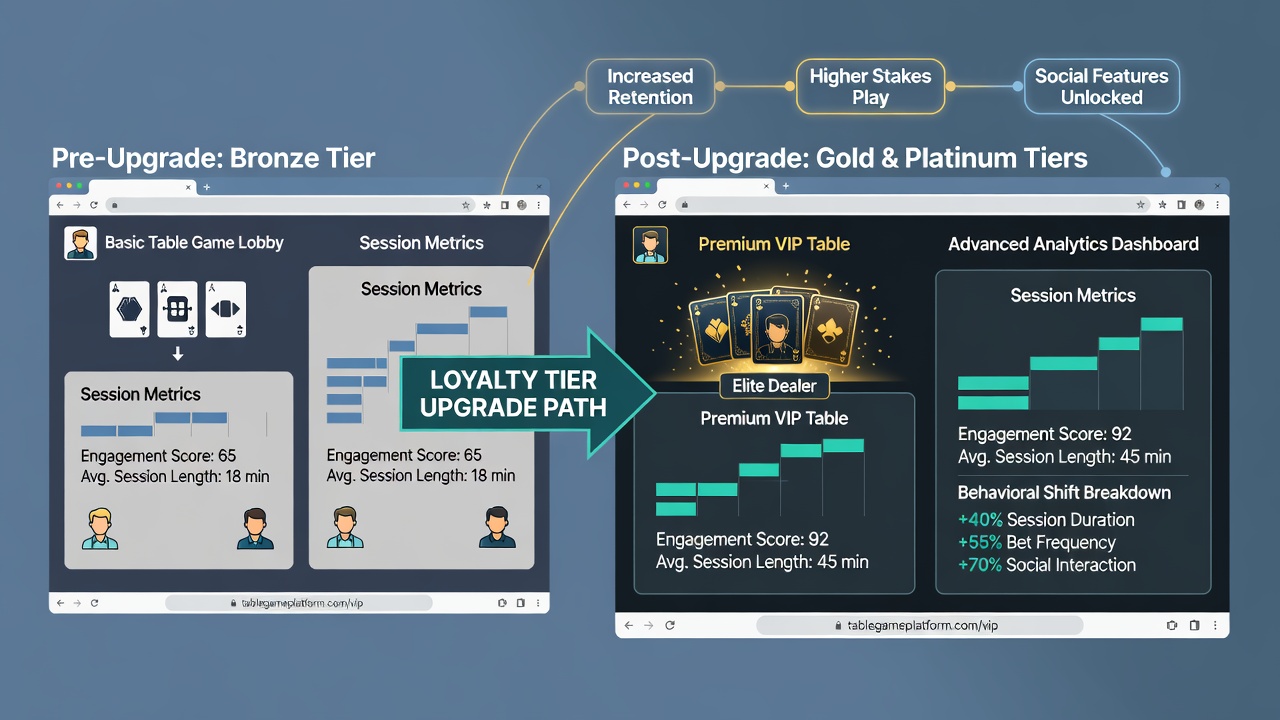
Ontario's Alcohol and Gaming Commission requires all licensed platforms to log session metrics such as duration, wager volume, and game selection when loyalty programs adjust player status, while British Columbia's gaming authority applies similar reporting rules through its provincial lottery corporation. These mandates generate aggregated figures that reveal consistent patterns across thousands of accounts each quarter. Data compiled through June 2026 shows that players who advance from base to mid-tier status extend average table game sessions by 18 to 27 minutes, and the increase holds across roulette, blackjack, and baccarat titles accessed through standard web browsers.
Observed Changes in Session Length and Frequency
Observers note that tier upgrades frequently coincide with shifts in login cadence as well. Accounts moving into higher reward brackets demonstrate a 14 percent rise in weekly sessions during the first 30 days after promotion, according to figures released by the Ontario Lottery and Gaming Corporation. The additional visits concentrate on evening hours between 8 p.m. and midnight, when browser traffic for table games peaks on desktop and laptop devices. Lower-tier players who remain static show comparatively stable session counts, suggesting the upgrade itself acts as a trigger rather than a simple reflection of existing engagement levels.
Bet Sizing and Game Selection Patterns
Alongside longer play windows, average bet sizes per hand or spin increase after tier advancement. Records from regulated operators indicate a median rise of 9 to 12 percent in wager amounts on table games once players unlock enhanced comps such as cashback percentages or priority support. Blackjack participants tend to migrate toward higher-limit tables that become accessible only after tier elevation, while roulette players shift from European to American variants that carry different house edges yet offer larger comp accrual rates. These adjustments occur within the same browser environment, without requiring downloads or app installations, which keeps all activity traceable under provincial audit requirements.
Researchers at the University of Nevada, Las Vegas examined comparable loyalty structures in multiple jurisdictions and found parallel outcomes, noting that the browser delivery method does not alter the directional effect of tier progression on session intensity. Their analysis incorporated Canadian provincial reports alongside data from Australian state regulators, confirming that the behavioral response remains consistent regardless of whether access occurs through desktop browsers or mobile web views.
Cross-Provincial Variations in Implementation
Quebec's regulatory body applies slightly different comp valuation formulas than Ontario, which produces modest differences in the magnitude of session extension. Players upgraded under Quebec rules extend sessions by an average of 21 minutes, whereas Ontario promotions yield closer to 25 minutes according to the most recent quarterly aggregates. Both provinces nevertheless record elevated table game retention rates after tier changes, and the pattern appears stable through the first half of 2026. Alberta's emerging framework, still in pilot stages, has begun collecting parallel metrics that will allow future comparisons once full reporting cycles complete.
Technical Factors in Browser Environments
Browser-based platforms must maintain continuous session logging to satisfy provincial data standards, which means every tier-related adjustment leaves a clear timestamp. Operators deploy real-time dashboards that flag when a player's cumulative activity qualifies for advancement, and automated notifications appear within the same browser window. This immediacy reduces the lag between qualification and behavioral response, contributing to the rapid uptick in session length documented in regulatory filings. Security protocols required by Canadian oversight also mandate that loyalty adjustments occur without disrupting active table game rounds, preserving continuity that encourages players to extend play rather than restart later.
Conclusion
Provincial oversight in Canada generates transparent datasets that link loyalty tier upgrades directly to measurable shifts in browser-based table game behavior. Session durations lengthen, visit frequency rises, and average wager amounts increase following promotion across multiple provinces. These patterns hold through June 2026 and align with findings from independent academic reviews that span additional regulatory regions. Continued reporting requirements will supply further granularity on how specific reward structures influence player decisions within the controlled browser environment.