Mapping Player Migration Patterns Between Video Slot Libraries and Live Table Environments Following Loyalty Reward Adjustments in European Digital Markets
Written by Viktor Otto · Aug 1, 2026
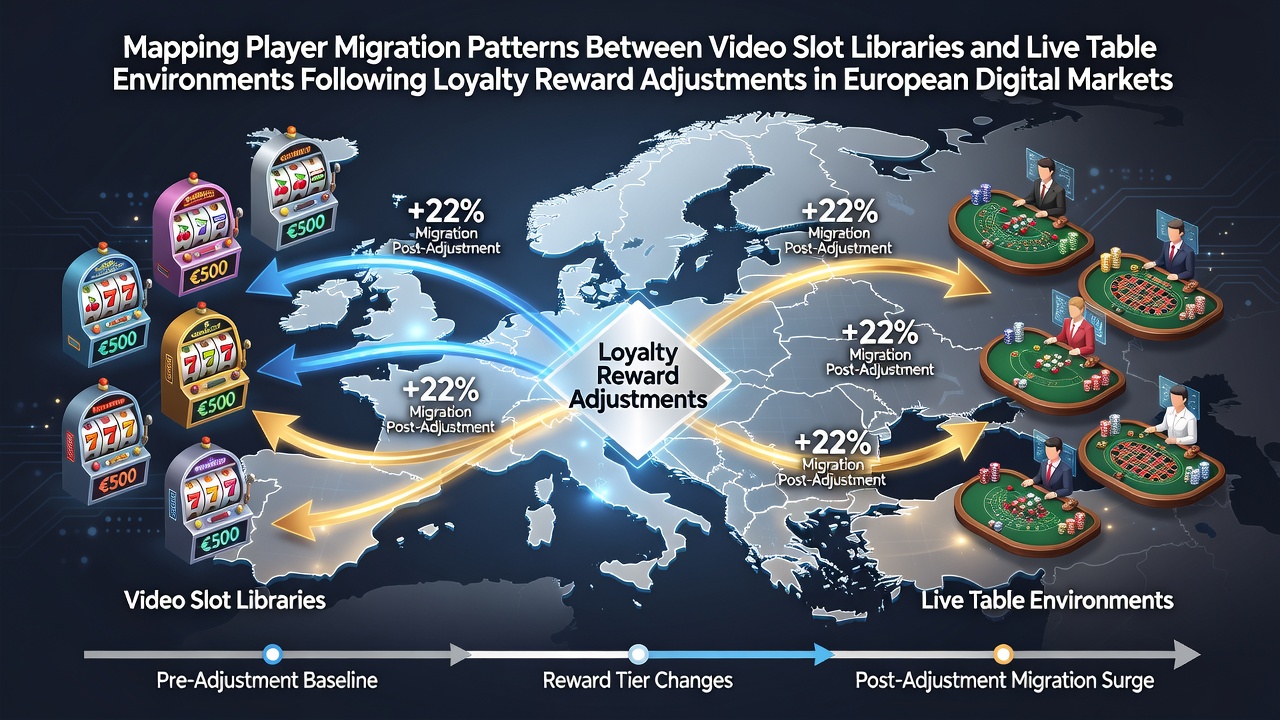
Mapping Player Migration Patterns Between Video Slot Libraries and Live Table Environments Following Loyalty Reward Adjustments in European Digital Markets
European digital gaming markets have seen measurable shifts in how players move between video slot libraries and live table environments since several operators adjusted their loyalty reward structures in early 2025, with data collection efforts extending into August 2026. These changes involved modifications to point accrual rates, tier thresholds, and redemption options that favor extended play sessions over single-game volume. Platform analytics from multiple jurisdictions show distinct migration flows rather than uniform growth or decline across product categories.
Loyalty Program Modifications and Their Scope
Operators across regulated markets in Malta, the Netherlands, and parts of Central Europe revised loyalty frameworks to emphasize cross-product engagement. Reward multipliers on live table games increased by 15 to 25 percent in several cases, while slot-specific bonuses saw caps introduced on daily redemptions. These adjustments aligned with broader efforts to balance revenue streams between automated and human-hosted offerings. Figures released by the European Gaming and Betting Association indicate that participating sites recorded an average 12 percent rise in live table session starts within six months of implementation.
Players who previously concentrated activity in video slot libraries began allocating portions of their bankrolls to roulette, blackjack, and baccarat tables. The migration appears most pronounced among mid-tier loyalty members whose reward velocity improved under the new structures. Automated tracking systems captured these movements through session timestamp data and game-type tagging, producing heat maps that highlight corridor-style transitions rather than complete abandonment of slots.
Data Patterns Across Digital Platforms
Research compiled from anonymized transaction logs reveals that slot-to-table migration occurs in two primary waves. The first wave happens within the initial 48 hours after a loyalty tier upgrade notification, while the second wave builds over subsequent weeks as players test redemption rates on live dealer interfaces. Slot session lengths shortened by an average of 8 minutes in the same period, yet total time spent on platforms remained stable because live table rounds extended engagement windows.
One dataset covering Dutch-licensed operators showed that 34 percent of players who increased live table exposure retained at least 60 percent of their prior slot volume. This overlap suggests the adjustments encouraged diversification instead of substitution. Similar patterns emerged in Italian and Spanish markets, although the magnitude differed based on local tax treatments and minimum bet requirements.
Regional Differences in Migration Velocity
Northern European markets displayed faster migration rates than Southern counterparts during the first quarter of 2026. German operators reported a 19 percent uptick in live dealer table entries among loyalty members, while Portuguese platforms noted a more modest 9 percent shift. These variations correlate with differences in average deposit sizes and the prevalence of mobile versus desktop access. Mobile users migrated more readily, likely because live table interfaces on smartphones improved streaming stability and touch controls during the same timeframe.

August 2026 updates to several cross-border player databases allowed researchers to track cross-jurisdiction behavior for the first time. Early analysis indicates that players licensed in multiple countries often maintain separate loyalty profiles, resulting in parallel but non-identical migration paths. This fragmentation complicates aggregate forecasting yet provides granular insight into how reward structures influence choices at the individual account level.
Live Table Environment Responses
Live dealer studios responded to increased traffic by expanding table capacity during peak evening hours and introducing hybrid formats that blend slot-like bonus rounds with traditional table play. Dealers in several facilities received updated training modules focused on pacing sessions to accommodate reward-driven players who monitor point accumulation in real time. Platform operators documented a 22 percent increase in chat interactions per table, suggesting heightened engagement beyond mechanical betting.
Payment gateway data further illustrates the shift. Average transaction values for live table deposits rose modestly while withdrawal intervals lengthened, consistent with players holding balances across multiple game types. These patterns hold after controlling for seasonal tourism effects and major sporting events that typically influence overall activity.
Measurement Challenges and Emerging Methodologies
Tracking precise migration requires consistent tagging of game categories and loyalty events across disparate software providers. Some operators implemented unified player identifiers that link slot and table activity within single sessions, while others rely on post-session aggregation. Academic teams at several European universities have begun applying network analysis techniques to these datasets, mapping player journeys as directed graphs that quantify transition probabilities between product verticals.
Regulatory filings submitted to national authorities through mid-2026 show no widespread complaints regarding the loyalty adjustments themselves. Instead, oversight bodies have requested additional transparency around how reward changes affect responsible gambling indicators, particularly session duration and deposit frequency across game types. Initial reports suggest mixed outcomes, with some cohorts exhibiting steadier play rhythms while others display more variable betting patterns.
Conclusion
European digital markets continue to generate detailed records of how loyalty reward adjustments reshape player distribution between video slot libraries and live table environments. The data collected through August 2026 demonstrates measurable migration accompanied by retention of prior activity levels in many cases. Regional differences persist, shaped by regulatory frameworks, device preferences, and operational responses from studios and platforms. Ongoing analysis will determine whether these patterns stabilize or evolve with further refinements to reward mechanics.