How Loyalty Reward Tiers Shape Switching Patterns Between Live Dealer Tables and Slot Sessions on Mobile Platforms
Written by Theo Otto · Aug 15, 2026
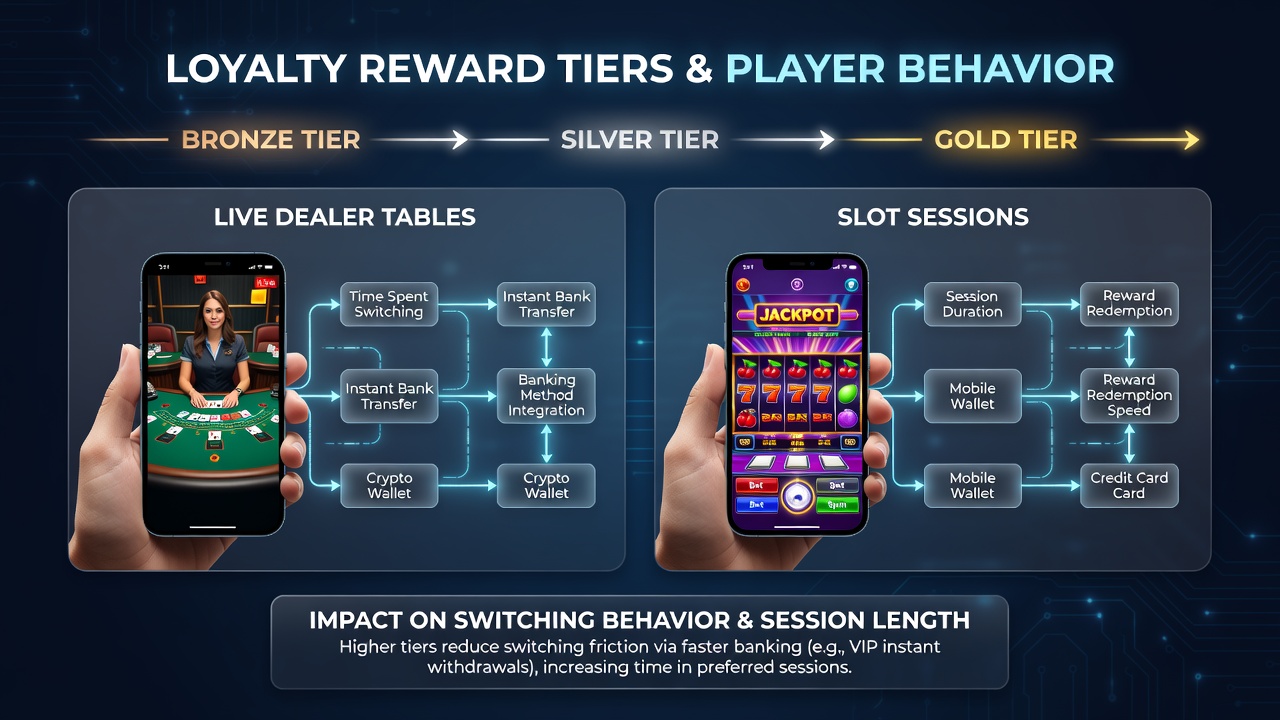
How Loyalty Reward Tiers Shape Switching Patterns Between Live Dealer Tables and Slot Sessions on Mobile Platforms
Researchers tracking mobile gaming behavior have documented clear links between loyalty reward tiers and the duration players spend switching between live dealer tables and slot sessions, particularly when different banking methods come into play. Data collected across regulated markets shows that higher-tier members often reduce transition times between game types because accumulated points unlock faster deposit and withdrawal processing along with targeted session extensions.
Tier Structures and Session Continuity
Loyalty programs typically divide players into bronze, silver, gold, and platinum levels based on cumulative activity, and each level carries distinct processing speeds for banking transactions on mobile devices. Studies from the New Jersey Division of Gaming Enforcement indicate that platinum-tier accounts experience deposit approvals in under 30 seconds via e-wallets, whereas lower tiers may wait several minutes when using credit card processors, directly affecting how quickly a player moves from a live dealer blackjack table to a slot session.
Observers note that these speed differentials compound over multiple switches, leading to measurable differences in total time spent across game categories. When instant banking options align with tier benefits, players maintain momentum between live dealer environments and automated slots without extended pauses for transaction confirmations.
Banking Methods and Transition Efficiency
Mobile platforms integrate various payment gateways that interact differently with loyalty tiers, and the choice of method influences session flow. E-wallet transfers paired with higher tiers allow near-instant movement between table games requiring real-time dealer interaction and slots that operate on automated cycles. In contrast, traditional card methods often introduce delays that discourage frequent switching, especially among mid-tier users who lack expedited processing privileges.
Figures from iGaming Ontario reveal that players utilizing tier-enhanced instant banking complete an average of 4.2 switches per hour between live dealer tables and slot sessions, compared with 2.7 switches among those relying on standard card funding. This gap widens further during peak hours when network congestion affects slower payment rails.
Live Dealer Versus Slot Dynamics
Live dealer tables demand sustained attention during rounds, while slots permit rapid, repetitive play, creating distinct switching motivations tied to reward tier incentives. Higher-tier members frequently alternate between these formats to maximize point accumulation rates, since many programs award bonus multipliers for combined table and slot activity within a single mobile session. Lower-tier players tend to linger longer in one category before switching because slower banking confirmation times interrupt the flow.
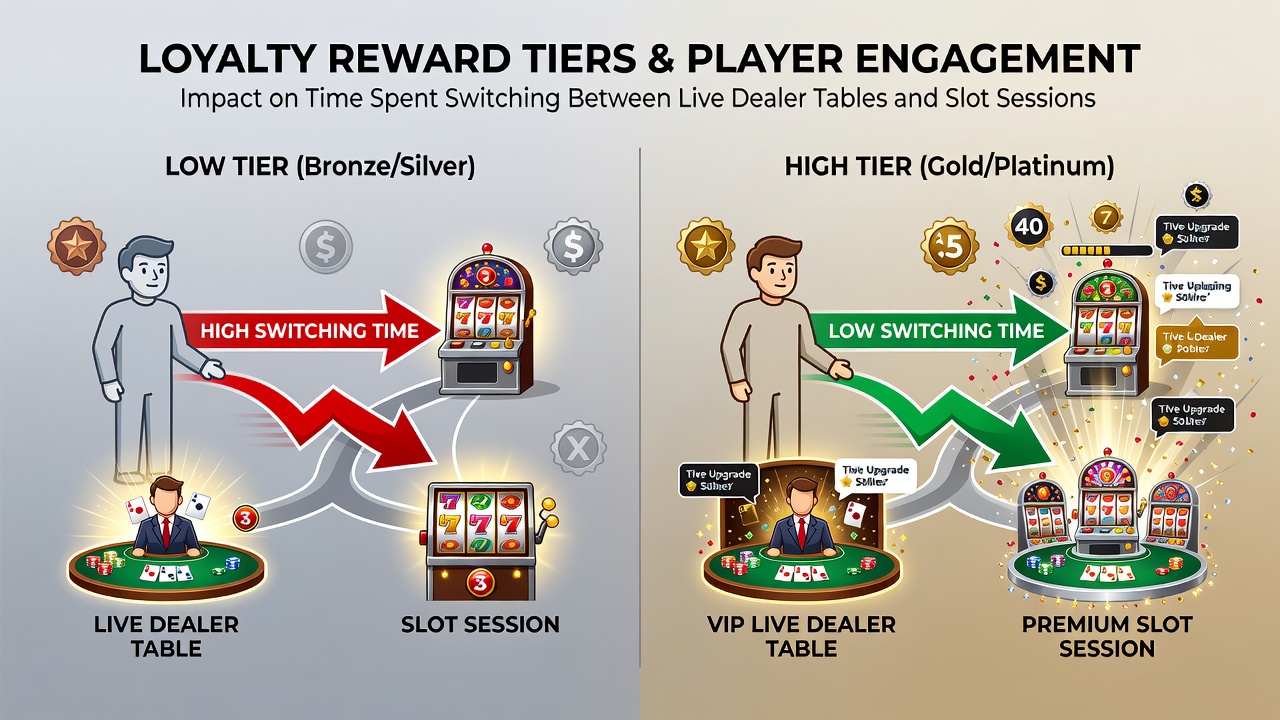
Analytics platforms employed by operators record that gold and platinum users allocate roughly 38 percent of mobile playtime to live dealer tables and 62 percent to slots when instant banking supports seamless transitions. Bronze users show a more static split of 51 percent tables and 49 percent slots, reflecting the friction introduced by delayed transaction approvals.
Regional Patterns in August 2026
Market reports compiled through August 2026 highlight consistent regional variations in how loyalty tiers interact with mobile banking speeds. Canadian provincial data indicates that tier upgrades correlate with a 22 percent reduction in average switch intervals when e-wallets are selected, whereas Australian state-regulated environments show similar patterns only among users who maintain continuous mobile sessions exceeding 45 minutes. These observations stem from aggregated operator logs rather than individual player tracking.
Industry analyses further demonstrate that banking method preferences shift as players advance tiers, with higher levels favoring options that minimize downtime between live dealer rounds and slot sequences. This behavioral adjustment appears across multiple jurisdictions without requiring changes to underlying game rules or interface designs.
Measurement Approaches and Data Sources
Tracking methodologies rely on timestamped transaction records paired with game-type logs to quantify switch durations accurately. Academic examinations from the University of Nevada, Las Vegas Gaming Innovation Center have established protocols for isolating tier effects from other variables such as device type or time of day. Their findings align with operational data indicating that expedited banking at elevated tiers supports shorter intervals between live dealer exits and slot initiations on mobile interfaces.
Additional context comes from aggregated reports issued by the American Gaming Association, which compile cross-state metrics on mobile engagement patterns without disclosing proprietary operator information. These sources confirm that loyalty tier benefits tied to transaction velocity produce measurable differences in how players distribute time across game formats.
Conclusion
The documented relationship between loyalty reward tiers, banking method selection, and switching intervals on mobile devices rests on transaction speed differentials and point accumulation mechanics. Higher tiers paired with instant payment options consistently enable more frequent movement between live dealer tables and slot sessions, while slower methods extend dwell time within a single category. Regional datasets collected through 2026 continue to illustrate these patterns across regulated markets, providing operators and researchers with quantifiable metrics for understanding mobile session behavior.