Currency Conversion Effects on Extended Mobile Poker Play Across Variants
Written by Ellis Beck · Jun 25, 2026

Currency Conversion Effects on Extended Mobile Poker Play Across Variants
Players accessing poker variants through mobile channels encounter currency conversion processes that directly influence how long sessions last and which game types hold attention over time, and researchers tracking these patterns have documented shifts tied to real-time exchange rates plus transaction fees. Data from multiple regulated markets shows that conversion costs accumulate during repeated deposits and withdrawals, which in turn affects decisions about continuing play or switching variants such as Texas Hold'em, Omaha, or Seven Card Stud. Observers note that when exchange rates move sharply, users often adjust bet sizes or session lengths to offset added expenses, creating measurable differences in engagement duration across platforms.
Mechanics of Currency Handling in Mobile Poker Environments
Mobile applications integrate payment gateways that perform automatic conversions at prevailing market rates, yet these systems apply spreads and fees that vary by provider and jurisdiction, and studies tracking transaction logs reveal that users in regions with volatile local currencies experience more frequent interruptions when rates spike. Those who study player behavior across Asian and European markets point out that platforms operating under Australian state regulations or Canadian provincial rules tend to display converted amounts upfront, which allows participants to anticipate total costs before committing funds. This transparency influences how long individuals remain engaged because unexpected fee deductions can prompt early exits from tables or switches to lower-stakes variants.
Session Duration Patterns Linked to Exchange Rate Fluctuations
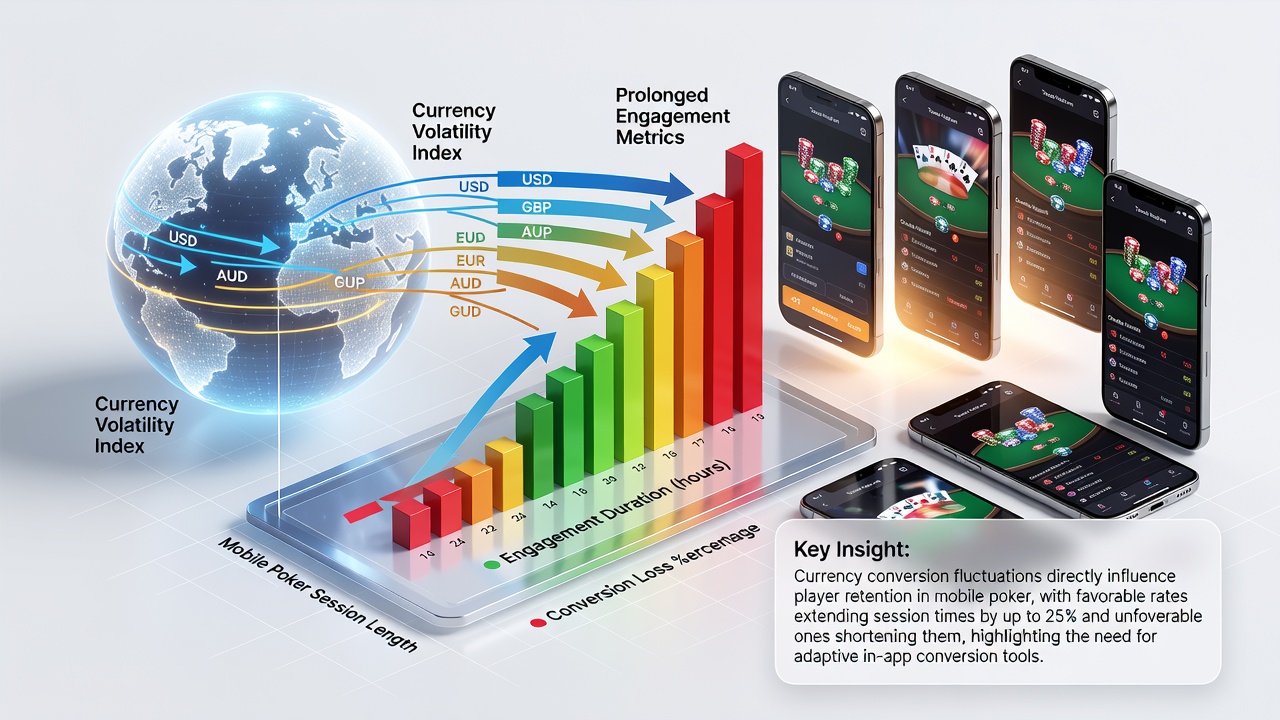
Prolonged engagement with poker variants on mobile devices correlates with periods of relative currency stability, according to aggregated session data collected through 2025 and into June 2026, while sharp movements in major pairs such as USD-EUR or AUD-CNY coincide with shorter average play times. Researchers examining multi-hand formats found that conversion overhead compounds across quick rebuys or tournament entries, leading many users to consolidate activity into fewer but longer sittings when rates favor their home currency. In contrast, users facing unfavorable conversions often fragment their time across several shorter sessions, a pattern documented in reports examining browser-based and app-based poker traffic under multiple oversight frameworks.
Regional Differences in Conversion Impact on Variant Preferences
Markets with stricter oversight on payment processing show distinct engagement profiles compared with more liberal environments, and figures released by regulatory bodies in Canada demonstrate that players using domestic e-wallets encounter fewer conversion layers than those relying on international cards. One study from an academic research group tracking Southeast Asian mobile traffic revealed that participants frequently migrate toward pot-limit Omaha when local currency depreciation raises the effective cost of no-limit Hold'em buy-ins. Those patterns emerge because the mathematical structure of certain variants allows smaller incremental bets that absorb conversion fees more gradually, extending overall session length despite added expenses.
Technological Adaptations and Player Responses
Platform operators have introduced in-app tools that display real-time conversion estimates alongside bet sizing options, and data indicates these features help sustain longer engagement by reducing surprise costs during extended play. Mobile users who enable automatic conversion alerts tend to maintain consistent participation across multiple variants, whereas those without such notifications show higher rates of abrupt session termination when rates shift. Industry reports covering June 2026 highlight that several major operators integrated predictive rate modeling into their apps, allowing players to schedule deposits during favorable windows and thereby supporting prolonged activity in cash games and tournaments alike.
Payment Gateway Influences on Multi-Variant Engagement
Different gateways impose varying conversion timelines and fee structures that shape how players distribute time across poker formats, and evidence from transaction analyses shows faster gateways correlate with higher retention in mixed-game sessions. Players who route funds through gateways with minimal spreads maintain steadier engagement levels even during currency swings, while slower or costlier options prompt switches to single-variant focus to minimize repeated conversions. Regulatory filings from jurisdictions outside the United Kingdom illustrate that platforms offering multiple gateway choices record longer average session durations because users select the most economical route for their specific location and currency pair.
Conclusion
Currency conversion mechanisms continue to intersect with mobile poker participation in measurable ways that affect both session length and variant selection, and ongoing monitoring by research institutions across different continents provides updated figures that track these dynamics through mid-2026. Operators and regulators alike examine these interactions to understand how payment infrastructure shapes user behavior without introducing new policy prescriptions. The available data underscores that conversion processes remain a tangible factor in how long and in what manner players engage with poker on mobile channels.