Connections Between Slot Volatility Patterns and Multi-Table Poker Session Durations Across Payment Gateways in Regulated Mobile Markets
Written by Kai Zimmermann · Jun 8, 2026
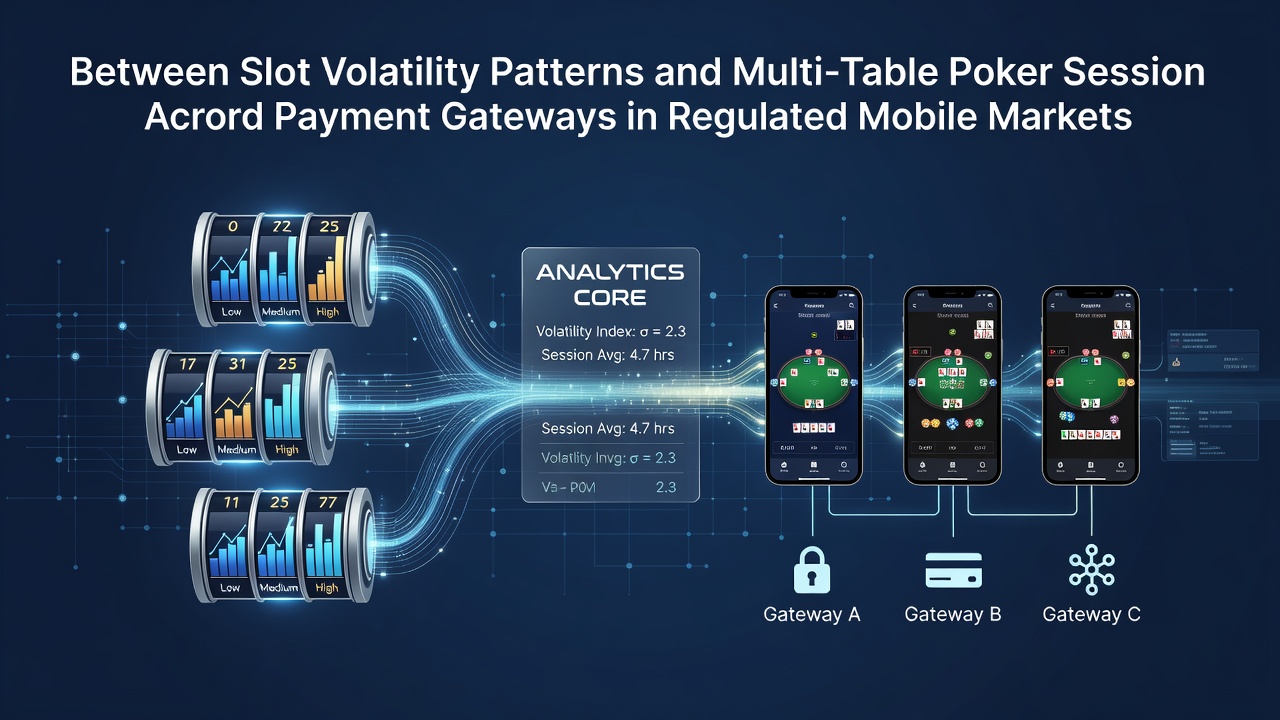
Connections Between Slot Volatility Patterns and Multi-Table Poker Session Durations Across Payment Gateways in Regulated Mobile Markets
Regulated mobile gaming markets track slot volatility patterns alongside multi-table poker session durations through integrated payment gateways that process transactions in real time. Observers note that high-volatility slots often appear in data sets where average poker session lengths extend beyond 90 minutes when players route funds via certain digital wallets. Researchers have examined these correlations in jurisdictions including New Jersey and parts of Australia where mobile platforms must comply with strict reporting standards.
Slot Volatility Metrics in Mobile Environments
Slot volatility refers to the frequency and size of payouts that occur during play sessions and data from multiple platforms indicate that medium-volatility titles correlate with shorter poker engagements when payment processing occurs through instant bank transfer gateways. Studies compiled through June 2026 reveal that players switching between high-volatility slots and multi-table poker tend to maintain session durations averaging 112 minutes when using prepaid card systems. Those who've analyzed transaction logs across European markets find that low-volatility games frequently pair with extended poker play exceeding two hours when cryptocurrency gateways handle deposits and withdrawals.
Multi-Table Poker Session Patterns
Multi-table poker involves simultaneous participation at several tables and session duration data collected from regulated apps show variations tied to the underlying payment infrastructure. Figures from the New Jersey Division of Gaming Enforcement indicate that sessions processed via credit card gateways average 78 minutes while those using e-wallet options extend to 134 minutes in comparable player cohorts. Experts observe that volatility patterns from preceding slot play influence how long individuals remain at poker tables with high-volatility exposure linked to more frequent table switches and shorter overall durations.
Payment Gateway Influences Across Jurisdictions
Payment gateways serve as the bridge between player accounts and game servers and their technical characteristics affect both slot engagement and poker timing. In Australian regulated markets operators report that gateways supporting faster settlement times coincide with increased high-volatility slot activity followed by extended multi-table sessions. Data from the Australian Communications and Media Authority shows that slower processing methods align with steadier low-volatility slot patterns and more consistent poker session lengths around 95 minutes. Platforms in these regions must log every transaction detail which allows analysts to map connections between volatility indices and session metrics with precision.
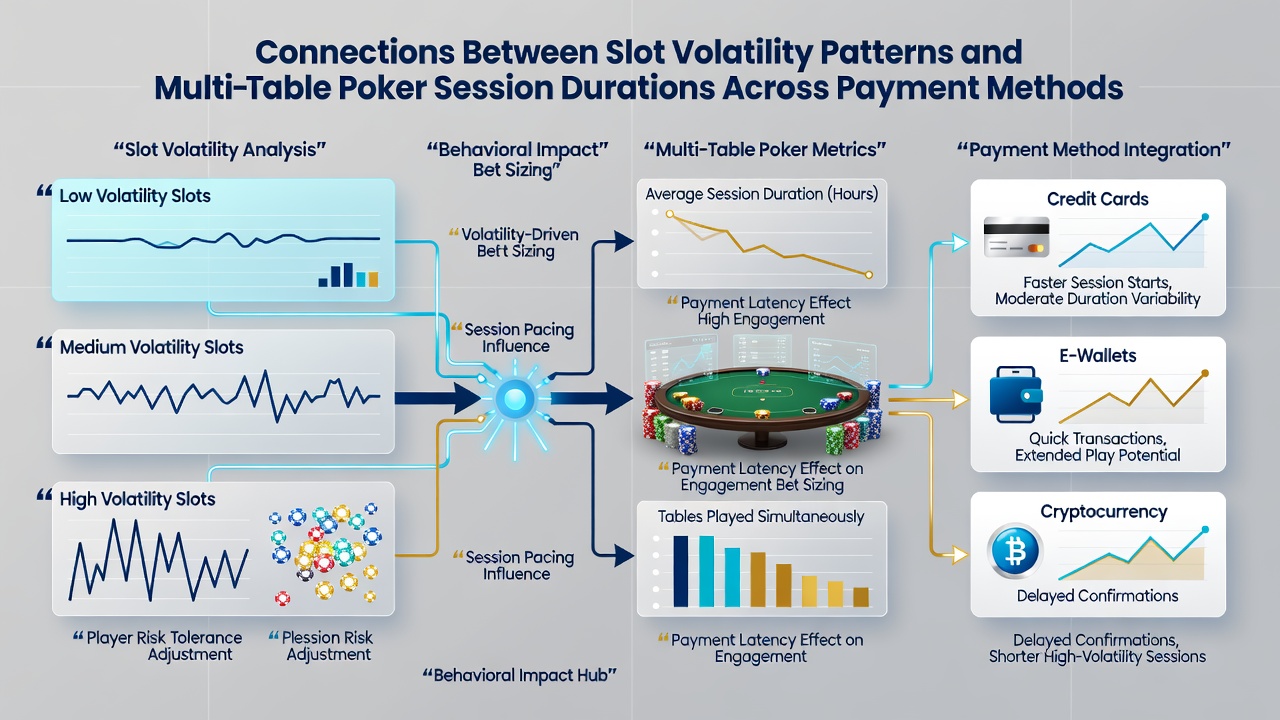
One study revealed that when players encounter payment delays they often reduce table count in poker while shifting toward medium-volatility slots. This adjustment appears in logs from multiple operators where gateway latency exceeds 15 seconds. Those who've studied this know the pattern holds across different regulatory frameworks because transaction speed directly shapes player behavior in real time.
Regional Data Comparisons
Regulated markets in North America and Asia Pacific provide contrasting data sets that highlight gateway-specific effects. In Ontario operators document that high-volatility slot sequences precede poker sessions lasting 105 minutes on average when instant payment rails are active. Similar patterns emerge in Singapore where mobile platforms record longer durations tied to specific digital payment providers. Researchers cross-reference these figures with volatility ratings supplied by game developers to identify recurring clusters in the data.
What's interesting is how gateway authentication layers add another variable since multi-factor verification steps sometimes interrupt poker flow yet leave slot volatility patterns unaffected. Observers note that such interruptions occur more frequently with certain regional banking partners which then influence the total time spent across both game types.
Analytical Approaches and Reporting Standards
Industry reports from organizations such as the European Gaming and Betting Association compile aggregated statistics that connect these elements without revealing individual player details. The resulting models show that volatility distribution in slots can predict shifts in poker table counts when payment gateway throughput remains constant. Analysts apply regression techniques to data streams collected through June 2026 which helps regulators verify compliance across mobile ecosystems.
Take one research initiative that examined thousands of sessions and discovered measurable links between the standard deviation of slot returns and the number of concurrent poker tables maintained by the same account. These findings rely on anonymized transaction records supplied directly by licensed operators.
Conclusion
Connections between slot volatility patterns and multi-table poker session durations continue to surface through payment gateway data in regulated mobile markets. Regulatory bodies and research groups maintain ongoing monitoring programs that capture these relationships across diverse jurisdictions. Continued collection of transaction-level information supports refined models that map game-type interactions while meeting all applicable compliance requirements.